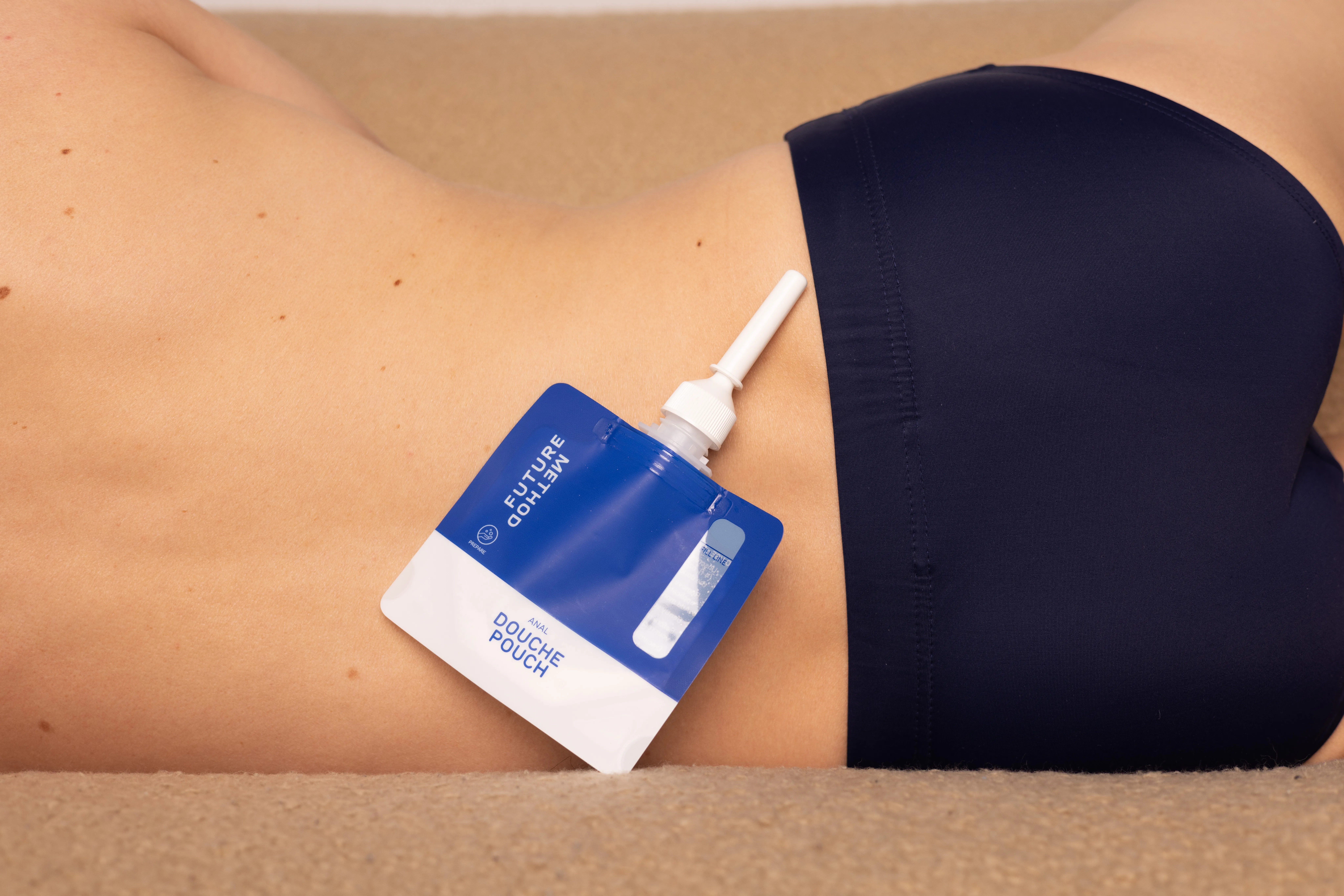
The Risk of Using Household Hacks for Anal Cleansing & Enemas
If you’ve ever stood in your bathroom, thirty minutes before a date, googling how to rig a water bottle into a makeshift douche, you’re not alone. Anal play deserves the same easy, judgment-free prep as anything else in the bedroom, but a lot of the homemade enema hacks that circulate online skip past a pretty important detail: your rectum is not a kitchen sink. What starts as a clever bathroom workaround can cause irritation and a cascade of feces at best, and a trip to the doctor at worst. That’s why we built Future Method.
A homemade enema is any DIY mix or setup people build at home instead of using a purpose-made product, and it shows up everywhere from constipation relief forums to bottoming prep guides. Sites like Healthline, Verywell Health, and WebMD have all flagged the dangers of homemade enemas, from dehydration to tissue damage, and for good reason. This guide walks through what those dangers actually are, answers the question of whether anal douching is bad for you, and gives you a clear, doctor-backed answer for what’s safe to douche with instead of the stuff under your sink.
Homemade Enemas 101: What They Are And Why People Try Them
An enema and a quick anal douche aren’t quite the same thing, even though people use the words interchangeably. A clinical enema is typically a larger-volume flush used to treat constipation or prep for a medical procedure. A douche, in the context of anal sex, is a smaller, lighter rinse meant to clear the rectal vault before bottoming. Both involve introducing liquid into the rectum, which is exactly why the same safety rules apply to each.
People land on a household enema solution for a few reasons. Some are dealing with constipation and reach for what’s on hand. Others want to feel more prepped before bottoming and assume a stronger flush means a better outcome. That’s how salt water, coffee, vinegar, and soap mixed with water became go-to DIY recipes, usually because those ingredients feel familiar and available, not because anyone tested them for rectal use. What works for you isn’t necessarily good for you.
Here’s the misconception worth clearing up: something being safe to eat or put on your skin says nothing about whether it’s safe inside your rectum or colon. That tissue is thin and absorbent, lined with a microbiome that keeps it balanced. Even gentle-seeming homemade mixes can throw that balance off and irritate tissue that has no idea what just hit it. The rest of this guide gets into exactly what can go wrong, and how to prep in a way that actually works with your body instead of against it.
Homemade Enema Dangers: What Can Actually Go Wrong
The dangers of at-home enemas aren’t hypothetical. I’ve treated patients dealing with the aftermath of a DIY flush gone wrong, and the damage is almost always avoidable. The wrong solution, the wrong volume, or the wrong equipment can turn a routine prep step into a trip to urgent care.
Here’s what tends to go wrong with homemade enema solutions:
- Electrolyte imbalance and dehydration from using too much fluid, the wrong concentration, or the wrong solution entirely, which can also trigger dizziness or fainting in severe cases.
- Infection or abscess from unwashed equipment or reused household items that introduce bacteria into the rectum.
- Tears or perforation of the rectum or colon from improvised nozzles, hard plastic tips, or aggressive insertion and unregulated or high pressure, which can send you to the ER.
- Chemical burns and inflammation from ingredients like coffee, lemon juice, vinegar, baking soda, soap, or hydrogen peroxide, all of which are far too harsh for rectal tissue.
- Microbiome disruption and dependency, where frequent flushing wipes out healthy bacteria and trains your body to rely on enemas to have a bowel movement.
- Vagal responses, like dizziness, sweating, or passing out, which can happen when the rectum is over-stimulated by pressure or volume.
Every one of these connects back to the same root cause: household ingredients and equipment were never designed to go inside your rectum. Keep these risks in mind, because the next section gets specific about which items people reach for and why each one is a problem.
Household Items You Should Never Use To Douche
Ask around and you’ll hear the same short list of household items to douche with: plastic water bottles, sports bottles, detachable shower heads, turkey basters, and repurposed condiment bottles. Each one seems harmless because it’s already in your bathroom, but none were built with rectal tissue in mind.
The problems start with design. Sharp seams, hard plastic tips, and uncontrolled water pressure from a showerhead can force water further into the colon than intended or tear delicate tissue on the way in. Then there’s what goes inside them. Coffee, vinegar, hydrogen peroxide, strong soap, and heavily salted water all read as “natural” or “gentle” online, but they’re chemically aggressive once they hit the rectal lining.
The tricky part is that damage doesn’t always announce itself right away – or if at all. You might feel fine walking out of the bathroom and then deal with cramping, pain, or bleeding hours later, once the irritation sets in. Here’s a quick comparison of common hacks against what a purpose-built option actually does differently:
| Household Hack | The Risk | Safer Alternative |
| Plastic water bottle | Hard edges, uncontrolled pressure | Future Method Reusable Bulb |
| Detachable showerhead | Uncontrolled water pressure, water pushed too far into the colon | Anal Douche Kit |
| Coffee or vinegar mix | Chemical burns, tissue inflammation | Anal Douche Powder Packs (pH-balanced, isotonic, and iso-osmolar) |
| Turkey baster | Non-sterile, imprecise volume control | Future Method Reusable Bulb |
A purpose-built bulb or kit controls pressure, volume, and body compatibility in a way a bottle from your recycling bin simply can’t. That distinction matters more than it might seem in the moment.
Is Anal Douching Bad For You Or Just Bad When It Is DIY
People ask us this constantly: is anal douching bad for you? It depends entirely on how you’re doing it. An occasional, low-volume rinse before bottoming is a very different act than an aggressive, frequent enema routine done for detoxing, weight loss, or the pursuit of perfectly clear water.
WebMD and Verywell Health both point to over-douching as the real concern, flagging irritation, infection risk, and microbiome disruption when people flush too often or with too much volume. If you’re dealing with hemorrhoids, inflammatory bowel disease, or you’ve had recent rectal surgery, that risk goes up further, and any enema or douche deserves extra caution.
Medical guidance from sources like WebMD and Verywell Health is consistent on this point: enemas are best used occasionally, in small volumes, and with a gentle, body-safe solution, rather than as a daily habit built around chasing a totally empty feeling.
Anal prep works best when the focus shifts from being perfectly empty to feeling comfortable and confident enough to be present. If you’re spending an hour flushing until the water runs clear, that’s pressure you don’t need to carry. DIY enemas add real danger on top of that pressure, while purpose-built products used sparingly are meaningfully safer, though no enema is entirely risk-free. The next section covers exactly what to use instead.
What Is Safe To Douche With Before Anal Sex
Plain tap water, especially in larger volumes, can be harder on rectal tissue than most people assume. Water pulls electrolytes out of the rectal lining through osmosis, which is why an isotonic and iso-osmolar saline solution, one that matches your body’s own chemistry, is the safer call for both comfort and tissue health.
A few things worth building into your routine:
- Use a purpose-built bulb or kit, like the Future Method Reusable Bulb or Anal Douche Kit, instead of anything improvised.
- Stick with an isotonic, iso-osmolar, pH-balanced solution, like our Anal Douche Powder Packs, rather than plain water or a homemade mix.
- Keep the volume small and stop flushing once the water runs mostly clear. You don’t need a dozen rounds.
- Give yourself 30 to 60 minutes between your last flush and sex, so any residual water has time to clear.
- Skip the urge to add salt, soap, or essential oils to your solution. Simple and body-safe beats “enhanced” every time.
For more on the full routine, our guide on Dr. Goldstein’s tips for safe anal douching walks through the technique step by step.
How To Prep For Anal Without Wrecking Your Butt
A good prep routine doesn’t need to revolve around the bathroom. Most of what makes bottoming comfortable happens well before you ever pick up a douche.
Here’s a simple routine that works for everyone:
- Use the toilet and take a normal shower a couple hours before sex, giving your body time to settle.
- Give yourself a small buffer after a big meal instead of bottoming right after eating.
- If you want extra reassurance, do one light round with a safe bulb or kit rather than flushing repeatedly until you’re “sure.”
- Use plenty of lube and take your time getting into it. Relaxed muscles do more for a mess-free experience than aggressive rinsing ever will.
- Talk to your partner about your comfort level ahead of time, so the pressure to be perfectly prepped doesn’t land entirely on the receptive partner.
None of this requires marathon flushing or a perfect routine every time. For more on where the pressure to be spotless actually comes from, and why it’s overrated, check out the biggest myths about prepping to bottom.
When To Skip Douching And Call Your Doctor
Some situations call for a doctor instead of another bathroom workaround. If you’re dealing with rectal bleeding, severe abdominal pain, fever, or you have a history of bowel surgery, skip douching altogether and get medical attention. The same goes for inflammatory bowel disease, diverticulitis, severe hemorrhoids, or heart and kidney conditions, all of which change how your body handles any enema or douche, homemade or not.
If you find yourself relying on enemas regularly to have a bowel movement, that’s a conversation worth having with a clinician rather than a habit to keep managing on your own. Bringing up anal sex, douching, or bathroom habits with a doctor can feel awkward, but it’s a completely normal and valid thing to ask about. This article is meant to educate, and your own healthcare provider is still the best source for guidance specific to your history, so when in doubt, ask them directly.
FAQs About Homemade Enemas And Anal Douching
1. What are the risks of DIY or homemade enemas?
- Homemade enemas can cause electrolyte imbalance, dehydration, irritation, infection, and even tears or perforation if the solution, pressure, or equipment is wrong.
- They can also burn or inflame tissue, disrupt the gut microbiome, and create a habit of relying on enemas too often.
2. What is safe to douche with before anal sex?
- The safest option is a purpose-built anal cleansing kit or bulb with an isotonic, iso-osmolar, pH-balanced solution, used in small volumes.
- Avoid using plain water or adding household ingredients like soap, vinegar, coffee, hydrogen peroxide, or essential oils, since those can irritate or injure rectal tissue.
3. When should I skip douching and contact a doctor?
- Skip douching if you have rectal bleeding, severe abdominal pain, fever, recent bowel surgery, inflammatory bowel disease, diverticulitis, severe hemorrhoids, or heart or kidney issues.
- If you depend on enemas for constipation or keep getting symptoms after douching, it is time to talk with a clinician instead of trying another DIY fix.
4. Is anal douching bad for you if you only do it once in a while?
- Occasional, gentle douching is very different from frequent or aggressive enemas, which are more likely to cause dehydration, irritation, or electrolyte problems.
- The safest approach is to keep it occasional, use a body-safe product, and stop if you notice pain, bleeding, dizziness, or other warning signs.