Anal Foreplay for Couples: Your Guide to Deeper Intimacy and Lasting Connection
Long-term relationships evolve. Bodies change. Desires shift. What once felt new becomes familiar—and that’s not a bad thing. Familiarity is where trust lives. And when trust is strong, exploration gets deeper.
Anal foreplay is one of those areas many couples become curious about over time. Not because something is missing, but because they want to expand what pleasure looks like together. When approached with care, communication, and the right preparation, anal play can add a new layer of physical sensation and emotional depth to an already solid partnership.
This guide prioritizes safety, open dialogue, and mutual enjoyment. Anal exploration isn’t about pressure or performance. It’s about learning each other’s bodies, building confidence session by session, and creating shared experiences that feel exciting and grounded at the same time.
At Future Method, our mission has always been to make anal wellness accessible, medically sound, and free from shame. Whether you’re in a queer partnership, a heterosexual relationship, or anywhere in between, anal foreplay is simply another form of intimacy available to consenting adults. When couples approach it with curiosity and respect, it often strengthens not just sexual chemistry, but the relationship as a whole.
Why Communication Is the Foundation of Intimate Exploration
Before hands, toys, or lube enter the picture, there’s conversation.
Couples who talk openly about sex tend to navigate change more smoothly. They’re better at expressing what feels good, what feels off, and what they might want to try next. Anal play especially benefits from this clarity. Because it’s an area surrounded by myths and vulnerability, communication isn’t optional—it’s foundational.
Open dialogue reduces guesswork. It lowers anxiety. It creates a sense of teamwork. Instead of one partner feeling like they’re being “convinced” or the other feeling shut down, the conversation becomes collaborative. You’re exploring something together.
Sometimes those talks can feel awkward at first. That’s normal. Many of us weren’t taught how to discuss sexual curiosity directly. But naming desires and limits out loud is part of building a relationship where both partners feel heard and respected.
Starting the Conversation: How to Talk About Anal Curiosity
Timing matters. Bringing up anal play in the middle of sex, especially without prior discussion, can create pressure. A better approach is choosing a relaxed, neutral setting—on a walk, during a quiet evening at home, or even while sexting.
Frame the conversation around curiosity rather than expectation. For example:
- “I’ve been reading about different kinds of foreplay couples explore. I’d love to hear how you feel about anal play.”
- “I’m curious about expanding what we do together. Is that something you’d ever want to talk about?”
- “What are your boundaries when it comes to anal touch? I want to make sure I understand what feels comfortable for you.”
Notice the tone. It’s open-ended. There’s room for a no. There’s room for uncertainty.
Listening is just as important as speaking. If your partner hesitates, ask what concerns them. Is it discomfort? Cleanliness myths? Fear of pain? Past experience? Sometimes the most productive outcome of the first conversation is simply understanding each other better.
Before exploring physically, it can also help to review educational resources together, like this guide on how to prepare for anal sex as a bottom. Even if penetration isn’t the goal, understanding preparation, preferences, and boundaries builds shared knowledge and reduces anxiety.
And remember: having the conversation itself builds intimacy. You’re saying, “Your comfort matters to me.”
Establishing Boundaries, Safe Words, and Check-Ins
We’ve talked about this in other blog posts—whether the topic is first-time bottoming, anal training, or depth play—and the recommendations don’t change. No matter the activity, clarity comes first.
Before trying anything new, take a few minutes to define:
- What’s on the table right now (external touch, rimming, fingers, toys)
- What’s off the table
- What might be something you revisit later, but not today
Having these distinctions makes it easier for both partners to relax. When you know the edges, you don’t have to brace yourself.
A simple safe-word system can make communication seamless. Many couples use the traffic-light model:
- Green = everything feels good
- Yellow = slow down, adjust, or check in
- Red = stop
Others prefer direct cues like “pause” or “not that.” The specific words matter less than mutual understanding and consistency.
Check-ins during play aren’t mood-killers. They’re care in action. A quiet “How’s that?” or “Want me to stay here?” keeps both partners aligned. Over time, this builds reliability. Each positive experience reinforces the idea that your body will be respected and your limits heard.
Enthusiastic consent is the baseline. If something feels uncertain, pressured, or physically off, that’s your cue to stop and regroup—not push through.
Anal foreplay may look different from couple to couple, but the framework is always the same: communicate clearly, move gradually, and prioritize how the body is responding in real time.
How Vulnerability Strengthens Your Bond
Anal foreplay requires a level of vulnerability that can feel different from other types of touch. It involves trust in both a physical and emotional sense. That trust, when honored, often deepens attachment between partners.
Allowing someone to explore a sensitive part of your body—or being entrusted with that access—can create a powerful sense of closeness. It says: “I feel safe with you.” That kind of safety doesn’t stay confined to the bedroom.
Couples who practice vulnerability sexually often find it spills into other areas of life. They become more comfortable discussing fears, needs, and changes. They respond to discomfort with curiosity instead of defensiveness. They build a dynamic where openness is normal.
Anal foreplay isn’t a requirement for a strong relationship. But for couples who are curious, approaching it thoughtfully can reinforce something bigger than a new sensation. It can reinforce the sense that you’re still learning each other—and that growth is something you do side by side.
Preparation and Hygiene: Confidence Through Care
We’ve said this across nearly every educational piece we publish: preparation isn’t about perfection. It’s about helping your body feel predictable, supported, and at ease.
When couples approach anal foreplay with a little forethought, the experience becomes far more relaxed. There’s less second-guessing. Less distraction. More ability to focus on sensation and each other.
Preparation is mutual care. It says, “I want us both to feel comfortable.” And when that comfort is established, pleasure expands naturally.
If you want a comprehensive breakdown of physical preparation—from diet to timing to tools—our guide on how to prepare for anal sex as a bottom walks through the details. But at its core, the goal is simple: reduce anxiety, support your body, and keep things straightforward.
Essential Hygiene Practices for Comfortable Play
Start with the basics. A shower beforehand is often enough for many couples, especially if anal foreplay is focused on external touch, massage, or shallow exploration.
For those who want additional digestive confidence, daily fiber can make a noticeable difference. Supporting stool quality helps the body empty more completely and consistently, which can reduce worry during intimacy. Our Butt + Gut Daily Fiber was designed with that in mind, and we go deeper into the science of fiber and digestive health in our article on thinking bottom to top. Fiber isn’t a last-minute fix—it’s a long-term, daily habit that helps the body respond more reliably.
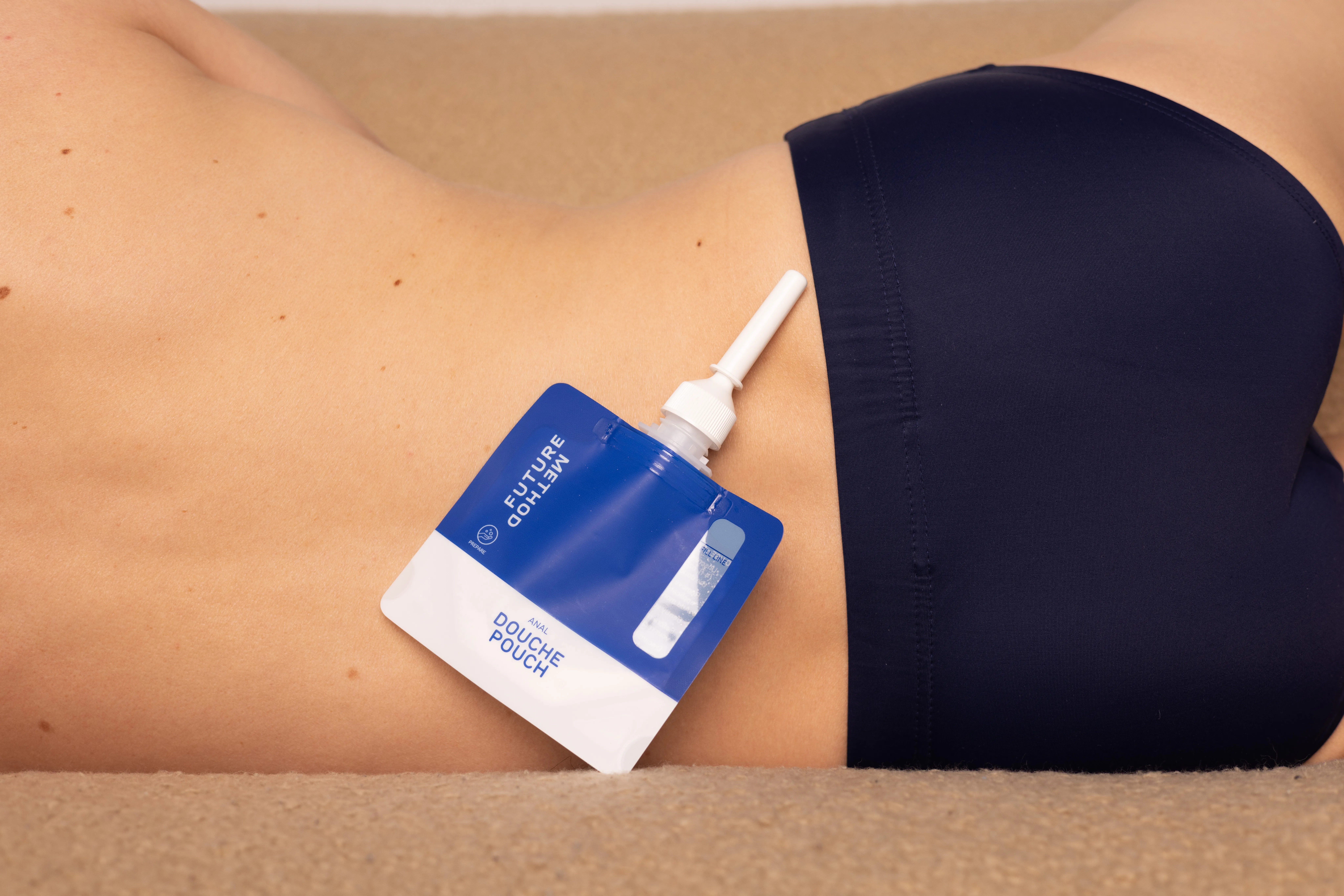
Some couples also choose to douche before anal play. This is optional, not mandatory. If it provides peace of mind, keep it simple. Use a body-safe system like our Anal Douche Kit, and aim to douche about 1–2 hours before play to allow the body to settle. Overdoing it can cause irritation, so less is more. The goal isn’t to “scrub” the body—it’s to gently rinse the lower rectum if desired.
Not every session requires the same level of prep. Over time, many couples learn what works best for their bodies and routines.
Normalizing the Natural: Releasing Shame and Anxiety
One of the biggest barriers to anal foreplay in long-term relationships isn’t technique. It’s fear of embarrassment.
Bodies have functions. That’s not a flaw. It’s physiology.
Even with preparation, there’s always a small chance of mess. Keeping a dark towel nearby, having wipes within reach, and maintaining realistic expectations can go a long way. Most importantly, partners who approach anal play with maturity understand that occasional surprises aren’t personal failures.
When couples respond calmly—clean up, check in, continue if everyone feels comfortable—it reinforces safety. There’s no shaming. No dramatizing. Just two adults navigating bodies that work the way bodies do.
That kind of acceptance often strengthens the relationship. It builds resilience and normalizes honesty. Instead of tiptoeing around anxiety, you move through it together.
Pre-Play Relaxation: Massage and Mindful Touch
Before any direct anal stimulation, slow external touch can make a significant difference.
Start with the glutes. Use firm, steady pressure to massage the larger muscles. This increases blood flow and helps release baseline tension. From there, move to the lower back and hips—areas that often hold unconscious tightness.
The perineum (the area between the genitals and the anus) can also benefit from gentle external pressure. Circles, slow strokes, or light kneading with lubricated fingers can help the body soften gradually.
When you move closer to the anus itself, stay external at first. Trace around it. Apply steady, reassuring touch without immediately attempting penetration. This gives the sphincter muscles time to respond and relax.
Using a high-quality lubricant—even for external massage—reduces friction and makes touch feel smoother and more intentional. The experience becomes less about “getting to the next step” and more about enjoying the process.
For many couples, this phase becomes its own form of foreplay. It slows everything down. It creates anticipation. And it reinforces the idea that anal play isn’t a rush toward penetration—it’s a layered, shared experience built on comfort and trust.
Setting the Scene: Foreplay That Heightens Anticipation
Anal play rarely works well in isolation. The body responds best when it’s already aroused, relaxed, and engaged.
For long-term couples, this matters even more. Routine can sometimes shorten foreplay or make it feel optional. But when exploring anal touch, full-body arousal is what allows the experience to feel fluid instead of tense. Blood flow increases. Muscles soften. Sensitivity heightens. The entire nervous system shifts into a receptive state.
Building desire across the whole body doesn’t just improve the physical side of anal foreplay—it strengthens your broader intimacy patterns. It reinforces that pleasure isn’t goal-oriented. It’s layered. It’s shared.
Sensual Touch and Full-Body Connection
Before focusing on the anus, focus everywhere else.
Making out longer than usual. Kissing the neck slowly. Running hands across the chest, breasts, thighs, and hips. Oral sex. Dirty talk that names what you’re curious about. Sustained eye contact that holds tension instead of rushing through it.
These aren’t extras. They’re what allow the body to naturally relax and respond.
Heightened arousal increases lubrication (internally and externally), improves muscle relaxation, and reduces the likelihood of discomfort during anal touch. When the receiver feels genuinely turned on—not rushed—the sphincter muscles tend to respond more easily.
If you’re curious about how foreplay fits into anal exploration more broadly, our beginner’s guide to pegging also walks through why building arousal first makes such a difference in comfort and pleasure: https://education.futuremethod.com/what-is-pegging-a-beginners-guide/
The more connected the two of you feel before moving to anal stimulation, the smoother everything tends to unfold.
Playful Elements: Lingerie, Ambiance, and Shared Showers
Anticipation is powerful—especially in long-term relationships.
Small environmental shifts can make a familiar bedroom feel new again. Soft lighting. Music that changes the rhythm of the evening. Lingerie or underwear (like jock straps) that signals effort and intention without saying a word.
Showering together can serve both practical and erotic purposes. It’s preparation wrapped in intimacy. Washing each other slowly, letting hands linger, building tension before moving to the bed—it keeps the energy collaborative rather than transactional.
Playfulness matters. Anal foreplay doesn’t have to feel clinical or overly serious. It can feel curious. Light. Even mischievous.
Long-term couples often benefit from these subtle shifts. They create contrast from everyday life and help keep sexual exploration feeling fresh without pressure to constantly escalate.
Techniques and Tools for Anal Foreplay
Think of this section as a progression—not a checklist.
You don’t have to try everything. You don’t have to move quickly. Exploration works best when it unfolds at a speed that feels manageable for both partners.
Start with the basics. See how the body responds. Build familiarity. Then, if curiosity grows, expand from there.
The goal isn’t to master techniques. It’s to learn each other’s responses.
Manual Stimulation: Fingers and External Touch
Hands are often the best starting point.
First, trim and file nails carefully. Even small rough edges can cause microtears in delicate tissue. Wash thoroughly.
Apply generous lubricant—more than you think you need. Anal tissue doesn’t self-lubricate the way vaginal tissue does, so external lube reduces friction and improves comfort.
Begin with external touch only. Use slow, circular motions around the anus. Apply steady pressure and maintain contact so the body can adjust. Avoid quick poking or sudden movements.
When the receiver feels relaxed and aroused, you can experiment with gentle insertion of a well-lubricated fingertip. Move slowly. Pause at the entrance. Let the muscles respond. A subtle in-and-out motion or small circles can feel grounding.
For partners with prostates, a gentle “come hither” motion toward the front wall of the rectum may produce a deeper sensation. But this should only happen once insertion feels fully comfortable.
Move at the receiver’s speed. If the body tightens, slow down or return to external touch.
For a deeper understanding of anatomy and muscle relaxation techniques, our anal training fundamentals guide breaks down what’s happening physiologically: https://education.futuremethod.com/anal-training-guide-how-to-do-anal-for-beginners/
Rimming (Oral-Anal Contact)
Rimming—oral stimulation of the anus—can be intensely pleasurable for some couples. It also requires clear enthusiasm and communication.
Hygiene preparation becomes especially important here. A shower beforehand is typically sufficient, and some partners prefer additional prep for peace of mind.
Dental dams can reduce STI risk, particularly in non-monogamous relationships or when STI status is unknown. Open conversations about testing and comfort levels should happen before the act itself.
Mutual interest is key. Rimming should never feel like an obligation or performance. When both partners genuinely want it, the sensation can heighten arousal significantly and relax the body before manual or toy play.
Our pegging guide also includes a breakdown of rimming within the broader context of anal foreplay: https://education.futuremethod.com/what-is-pegging-a-beginners-guide/
As always, ongoing communication keeps the experience grounded and safe.
Anal Toys for Couples: Starting Your Collection
Toys can introduce new sensations and create a sense of shared experimentation.
For beginners, consider:
- Small butt plugs with a wide flared base
- Slim prostate massagers
- Small, flexible anal beads
Material matters. Choose body-safe options like medical-grade silicone, stainless steel, or borosilicate glass. Avoid porous materials that can harbor bacteria.
If you’re unsure where to start, our comprehensive beginner’s toy guide covers sizing, safety, and selection in detail: https://education.futuremethod.com/anal-sex-toys-a-beginners-guide-to-anal-play/
For couples interested in gradual progression, structured dilator sets can help the body adapt over time. Our Glass Anal Dilator Set and Silicone Anal Trainer Set are designed to support controlled, stepwise expansion while prioritizing safety and anatomical fit:
https://futuremethod.com/products/glass-anal-dilator-set
https://futuremethod.com/products/silicone-anal-trainer-set
Discussing who uses what—and why—can be part of the excitement. Some couples discover that switching roles or exploring stimulation on both partners adds a new layer of empathy and understanding.
Advanced Options: Plugs for Extended Wear and Anticipation Building
For couples with more experience, extended plug wear can build anticipation throughout the day or as a prelude to partnered sex.
This might mean wearing a small, comfortable plug for a limited period before meeting up later. The psychological element—the shared knowledge that something is already happening—can reignite desire in established relationships.
Safety remains critical. Always use plugs with a large flared base. Set reasonable time limits. Check in regularly about comfort. If there’s numbness, sharp pain, or persistent discomfort, remove the plug.
Extended wear should feel subtle and sustainable—not distracting or painful.
Exploring Additional Tools: Vibration and Beyond
Vibrating toys and advanced prostate massagers can intensify sensation and reduce the amount of manual movement required. For some couples, vibration helps relax muscles and heighten pleasure simultaneously.
More advanced devices—like sex machines or e-stim equipment—exist, but these require thorough research, education, and careful safety practices. They’re not necessary for fulfilling anal foreplay, and they’re best approached slowly and with a strong understanding of risks.
For most couples, hands, high-quality lubricant, and one or two well-chosen toys provide more than enough range.
Move forward when it feels right. Stay where you are when it doesn’t. That’s how sexual trust grows over time.
The Physical Practice: Positions, Lubrication, and Pacing
Once communication and preparation are in place, the physical logistics matter.
Anal foreplay becomes pleasurable when comfort is prioritized over performance. Every couple navigates a learning curve—figuring out angles, depth, pressure, and rhythm. That process is normal. It’s part of building sexual fluency together.
Experimentation helps. So does patience. Some positions make relaxation easier. Some allow better communication. Others offer more control to the receiving partner. Try different setups and notice how the body responds.
Positions That Provide Comfort and Access
The Physical Practice: Positions, Lubrication, and Pacing
Once communication and preparation are in place, the physical logistics matter.
Anal foreplay becomes pleasurable when comfort is prioritized over performance. Every couple navigates a learning curve—figuring out angles, depth, pressure, and rhythm. That process is normal. It’s part of building sexual fluency together.
Experimentation helps. So does patience. Some positions make relaxation easier. Some allow better communication. Others offer more control to the receiving partner. Try different setups and notice how the body responds.
Positions That Provide Comfort and Access
There’s no universal “best” position. Comfort depends on anatomy, flexibility, and the emotional tone you want to create.
Spooning (side-by-side)
This is one of the most relaxed and intimate options. Both partners lie on their sides, with the penetrating partner behind.
- Pros: Close body contact, easy communication, controlled depth.
- Cons: Slightly less visual connection unless you turn toward each other.
- Great for beginners or slower sessions where you want warmth and security.
Doggy Style (receiver on hands and knees or chest down)
This position provides clear access and can allow for deeper angles.
- Pros: Easy stimulation of the prostate; strong physical leverage.
- Cons: Depth can increase quickly, so control and communication are essential.
- Adjusting hip height with pillows can reduce strain and improve comfort.
Receiver on Back with Legs Raised
The receiving partner lies on their back, legs bent or lifted.
- Pros: Eye contact, easy verbal communication, emotional closeness.
- Cons: Depth varies depending on flexibility and positioning.
- This can feel more intimate and allows partners to monitor facial cues easily.
Receiver on Top (straddling)
The receiving partner lowers themselves onto a finger, toy, or partner.
- Pros: Maximum depth control for the receiver; easy to stop or adjust.
- Cons: Requires some leg strength and balance.
- This is often one of the most confidence-building positions because the receiver controls speed and pressure.
If you’d like more detail on angles and positioning adjustments, our guide to anal play for women offers useful anatomical insights that apply broadly to all couples:
https://education.futuremethod.com/a-guide-to-anal-play-for-women/
Small adjustments—pillows under hips, changing leg angles, altering torso height—can dramatically change comfort.
Lubrication: Your Most Important Tool
The anus does not self-lubricate. That means lubricant isn’t optional—it’s foundational.
Start with more than you think you need. Apply it externally and, when appropriate, to fingers or toys before insertion. Reapply as needed. Dryness increases friction, which increases discomfort and risk of irritation.
Two primary categories:
Water-Based Lubricants
- Easy cleanup
- Safe with all toy materials
- May require reapplication during longer sessions
Silicone-Based Lubricants
- Longer-lasting
- Slicker, more slippery feel (less friction)
- Not compatible with silicone toys
For partnered anal play without silicone toys, many couples prefer the staying power of silicone formulas. Our Silicone Anal Lubricant was formulated specifically for anal tissue to provide extended glide with minimal reapplication.
Whatever you choose, lubrication should feel abundant—not minimal.
The Art of Going Slow: Listening to Your Body
Progression works best when it follows the body’s signals.
Never force penetration. If there’s resistance, pause. Return to external touch. Add more lubricant. Increase arousal elsewhere. Let the muscles settle before trying again.
Some nights the body feels open and responsive. Other nights it doesn’t. “Not tonight” is always a valid answer. That kind of flexibility protects long-term trust.
Patience during early exploration helps create positive physical associations. When the body learns that anal stimulation won’t be rushed or pushed past its limits, tension decreases over time. Future sessions often feel smoother because the nervous system isn’t bracing for discomfort.
For couples who want to gradually build tolerance and familiarity, our anal training fundamentals guide breaks down how slow progression supports muscle relaxation and reduces pain:
https://education.futuremethod.com/anal-training-guide-how-to-do-anal-for-beginners/
Safety First: Protecting Your Health and Wellness
Safety conversations don’t dampen desire. They protect it.
When couples understand how anal tissue works and how to care for it properly, they reduce anxiety and prevent avoidable injuries. That creates a foundation where exploration feels supported rather than risky.
Anal tissue is delicate. It doesn’t self-lubricate. It’s more prone to small tears if rushed or under-lubricated. Respecting those realities isn’t clinical—it’s caring. It shows that both partners value long-term wellness as much as short-term pleasure.
Knowledge allows you to explore with confidence.
Choosing Body-Safe Materials and Cleaning Toys
If toys are part of your foreplay, material safety matters. Stick with non-porous, body-safe options such as:
- Medical-grade silicone
- Stainless steel
- Borosilicate glass
Non-porous materials don’t trap bacteria the way porous materials can. That’s especially important for anal use, where bacteria are naturally present and the tissue is more susceptible to irritation.
Cleaning should be consistent and thorough:
- Wash toys with mild soap and warm water after each use.
- Use a dedicated toy cleaner if preferred.
- Some non-porous toys (like stainless steel or borosilicate glass without electronics) can be boiled for sterilization or placed in the dishwasher, but always check manufacturer guidelines first.
Never share toys between partners without a condom barrier or full sterilization. And if switching from anal to vaginal use during the same session, always use a fresh condom or clean the toy first to prevent bacterial transfer.
For a deeper dive into material safety, sizing, and toy care, our comprehensive beginner’s guide to anal toys breaks it down clearly:
https://education.futuremethod.com/anal-sex-toys-a-beginners-guide-to-anal-play/
Taking these steps protects the integrity of anal tissue and reduces infection risk over time.
STI Prevention and Barrier Methods
Anal contact can transmit sexually transmitted infections. That includes penetration, shared toys, and oral-anal contact.
Condoms reduce STI transmission risk during penetration and can also be used over toys for easier cleanup and safer sharing. If switching between partners or between different types of play, use a fresh condom.
For rimming, dental dams provide a barrier that lowers STI risk. Open conversations about testing history, monogamy agreements, and protection preferences should happen outside of the heat of the moment.
Our beginner’s guide to pegging includes a practical breakdown of condom use with toys and STI considerations in anal play:
https://education.futuremethod.com/what-is-pegging-a-beginners-guide/
Approaching these discussions calmly keeps the tone health-focused rather than fear-based. Protection is simply part of responsible adult intimacy.
Recognizing When to Seek Medical Advice
Mild sensitivity after anal play can happen, especially during early exploration. But certain symptoms warrant medical evaluation:
- Sharp or severe pain
- Bleeding beyond light spotting
- Persistent pain lasting well after play ends
- Signs of infection (fever, unusual discharge, increasing redness or swelling)
If something feels wrong, don’t ignore it. Being proactive about symptoms helps prevent small issues from becoming larger ones.
Aftercare: Deepening Your Connection Beyond the Physical
What happens after anal foreplay matters just as much as what happens during it.
Aftercare is the bridge between physical experience and emotional meaning. It reinforces safety. It helps the nervous system settle. It signals that vulnerability was received with care.
For long-term couples, this is where growth compounds. When partners consistently close the loop—physically and emotionally—they build trust that carries into future exploration. Each positive experience becomes easier to revisit because the body remembers that it was supported afterward.
Physical Comfort and Emotional Reassurance
Start with simple physical grounding. Hydrate. Use the bathroom if needed. Gently clean up together or separately—whatever feels natural. If there’s mild sensitivity, resting side by side can help the body relax fully.
Cuddling, skin-to-skin contact, and slow breathing regulate the nervous system. The body shifts from heightened arousal back to calm, and that transition works best when it isn’t abrupt.
Verbal affirmation also plays a powerful role. Saying things like:
- “I loved exploring that with you.”
- “Thank you for trusting me.”
- “You felt incredible.”
- “I’m really proud of us for trying that.”
Those statements reinforce safety. They attach positive emotion to vulnerability. Over time, this builds confidence around future exploration.
If something felt slightly uncomfortable or unexpected, aftercare is a good time to acknowledge it gently. Not as criticism—just as information.
Reflection and Ongoing Exploration
Long-term intimacy thrives on feedback. After a new experience, ask:
- What felt especially good?
- Was there a moment that felt tense?
- Is there anything you’d adjust next time?
- Is there something you’d want more of?
These conversations don’t have to be clinical or lengthy. Even a few minutes of reflection strengthens communication habits.
When couples regularly discuss their experiences, they refine their sexual dynamic. They learn patterns. They anticipate each other more accurately. Exploration becomes smoother because there’s shared understanding instead of guesswork.
This kind of debriefing is relationship maintenance. It keeps intimacy responsive rather than routine. It encourages growth without pressure.
Anal foreplay, like any form of sexual exploration, is one chapter in a longer story. When you pair physical curiosity with emotional follow-through, you create a foundation that supports desire for years to come.
FAQs About Anal Foreplay for Couples
Q: Is anal foreplay safe for everyone?
In most cases, yes—when approached with preparation, lubrication, and clear communication.
That said, certain medical conditions call for extra caution. If you’ve recently had anal surgery, are dealing with active hemorrhoids or fissures, or are experiencing an IBD flare-up, it’s best to consult a healthcare provider before engaging in anal play.
Your body will also give you real-time feedback. Persistent discomfort, sharp pain, or resistance is a signal to slow down or stop. With patience and thoughtful progression, most couples can explore anal foreplay safely.
Q: How do I bring up anal foreplay if my partner has never tried it?
Start outside the bedroom. Choose a relaxed moment and approach the topic with curiosity rather than expectation. For example:
“I’ve been reading about anal play and I’m curious about exploring it together. How do you feel about that?”
Keep the tone open. Make it clear there’s no pressure and that their comfort matters to you. Invite their thoughts. Ask what concerns or questions they might have.
Sometimes it helps to read educational resources together so the conversation feels informed rather than speculative. Sharing a guide like this one can create a neutral starting point for discussion.
Q: Do we need special products for anal foreplay?
The essentials are simple: quality lubricant and patience. Everything else is optional.
Daily fiber can support digestive regularity and increase confidence, and hygiene tools may offer peace of mind for some couples. But they aren’t requirements.
If you choose to use toys, prioritize body-safe materials with flared bases. Start small. Build gradually. Add tools only if they enhance your experience rather than complicate it.
The most important “tool” remains communication.
Q: How can anal foreplay strengthen our relationship?
Exploring something new together requires trust, honesty, and attentiveness.
Couples who navigate anal foreplay practice asking for consent, listening carefully, adjusting to feedback, and prioritizing each other’s comfort. Those habits don’t stay confined to sex—they support the overall health of the relationship.
Shared exploration can also reintroduce curiosity into long-term partnerships. Trying something new, learning each other’s responses, and building skill together keeps intimacy evolving rather than static.
Q: What if something doesn’t feel good during anal foreplay?
Pause immediately and communicate. Use a safe word or simply say “stop” or “that doesn’t feel good.” There should never be pressure to continue.
Discomfort is feedback. You might need more lubricant, a different position, more external warm-up, or a slower approach. Sometimes the body just isn’t in the mood for anal play that day.
Partners who respect boundaries build reliability. Reliability makes future exploration easier.
Q: How long does it take to feel comfortable with anal foreplay?
There’s no universal timeline. Some people feel comfortable after one or two sessions. Others benefit from weeks of gradual exploration. Many couples find that slow progression creates better long-term comfort and familiarity.
If you’re curious about structured progression, our guide to your first time bottoming outlines what a 4–6 week training timeline can look like:
https://education.futuremethod.com/a-beginners-guide-to-your-first-time-bottoming/
Go at a speed that feels manageable for both partners. Comfort grows through repetition, positive experiences, and consistent communication.
Conclusion: Building Intimacy That Lasts Through Exploration and Trust
Anal foreplay isn’t just about adding a new technique to your sex life. It’s about how you approach it together.
When couples lead with communication, consent, patience, and mutual enjoyment, the experience becomes larger than any single act. You learn how to listen more closely. You learn how your partner’s body responds. You learn how to adjust without ego and speak up without fear. Those skills strengthen intimacy far beyond the bedroom.
Exploration works best when it’s grounded in trust. That trust is built through preparation that supports the body, lubrication that protects tissue, pacing that respects limits, and aftercare that reinforces safety. Over time, those habits create a sexual dynamic that feels reliable and open to growth.
At Future Method, our role is to support that process. We’re here to provide medically grounded education and body-safe products that remove guesswork and reduce shame. Whether you’re building foundational habits or refining what already feels good, you can explore our full collection here:
https://futuremethod.com/pages/all-products
If you’re looking for a streamlined starting point, our Complete System Kit brings together key essentials in one place:
https://futuremethod.com/products/anal-douche-kit
And if you want to continue learning, our education hub offers in-depth, practical guidance across every stage of anal exploration:
https://education.futuremethod.com/
Deepening intimacy is an ongoing process. It evolves as you do. Approached with curiosity and care, anal foreplay can become one more way you grow together—expanding trust, strengthening closeness, and keeping desire active over the long term.