How to Anal Gape Safely: Myths, Techniques, and Long-Term Effects
Anal gaping is one of the most advanced—and misunderstood—practices in anal play. Often seen in porn or power play scenarios, it’s become a curiosity for many who are deeply exploring anal sex, especially gay men. But with curiosity often comes confusion. Is it safe? Will it cause permanent damage? How do you even start?
The truth is, anal gaping combines physical technique, mental readiness, and a whole lot of patience. It can be pleasurable, empowering, and visually arousing, but only when approached with informed care. This guide offers a step-by-step roadmap for how to anal gape safely, while breaking down common myths and explaining what to expect long-term. Whether you’re here to learn, explore, or just get clear on the facts, this is the information you need to move forward confidently.
What Is Anal Gaping?
Anal gaping is the intentional outcome in anal play where the anus remains visibly open or dilated after penetration or stretching, achieved passively or actively.
Types of Anal Gaping
To practice this safely, you must understand the two distinct types of anal gaping:
- Passive Gaping: Occurs when the anus remains open after a toy or penis is removed. This is typically the result of extended dilation and relaxation—where the muscles have stretched enough to allow a temporary gape without force.
- Active Gaping: Active gaping, on the other hand, is a technique where the receiver learns to control their pelvic floor and sphincter muscles to open the anus intentionally, often without insertion. It requires time, training, and high levels of body awareness.
Your individual anatomy plays the largest role in whether your tissue can achieve this look.
How to Safely Do Anal: An Expert’s Guide
How to Anal Gape Safely
Achieving an open stretch requires step-by-step muscle preparation, gradual dilation, and the right equipment. Rushing through these steps causes muscle spasms and tissue tears, while taking your time allows the sphincter to adapt safely.
Anal Dilation Techniques
Dilation involves using progressively larger, graduated tools to widen the anal canal over days or weeks. This physical training conditions the sphincter muscles to open without snapping shut or causing pain.
- Start Small: Begin with the smallest size in a dilator set. Do not move up to the next size until the current tool inserts easily and sits comfortably without any stinging or pressure.
- Set a Timer: Keep the tool inserted for 10 to 20 minutes per session. Gently rotate the tool or apply light, outward pressure against the sides of the muscle wall to simulate a stretch.
- Rest Between Sessions: Limit your practice to one session per day, and take a full 24-to-48-hour break if your muscles feel deeply tired or sore.
Anal Stretching Exercises
Incorporate targeted muscle movements to build the flexibility and conscious control needed for active gaping.
- Perform Reverse Kegels: Instead of squeezing your muscles inward (like stopping the flow of urine), gently push outward as if you are trying to pass a bowel movement. This physical drop lowers the tension in your pelvic floor and physically opens the sphincter.
- Match Your Breathing: Inhale deeply into your stomach to expand your core. As you exhale, direct that downward relaxation toward your butt, letting the muscles drop completely flat.
- Use Warm-Up Positions: Drop into a deep squat or lie on your back with your knees pulled to your chest for 5 minutes before inserting a toy. These positions physically alter your pelvic angle and relax the surrounding muscle groups.
Tools for Anal Gaping: Dilators, Cones, and Plugs
Your training tools must be completely smooth, nonporous, and built with a flared base to ensure safety.
- Silicone Dilators: These tools offer a softer, more flexible density that bends with your anatomy, making them ideal for the early stages of training.
- Glass Dilators: Made from borosilicate glass, these tools provide firm, unyielding weight and precise pressure, which helps advanced users acclimate to deeper stretches.
- Graduated Cones: Single-piece tools with a continuous, seamless taper offer a smooth transition from a narrow tip to a wide base, allowing you to control the exact depth of your stretch without stepping up to an entirely new toy.
Lubrication and Hygiene Rules
No matter how experienced you are, lubrication is essential, especially during prolonged training. Our Silicone Anal Lubricant is long-lasting and body-safe, designed specifically for anal use. Avoid household products like coconut oil or body lotion; they may cause irritation, break down toy materials, or increase the risk of infection.
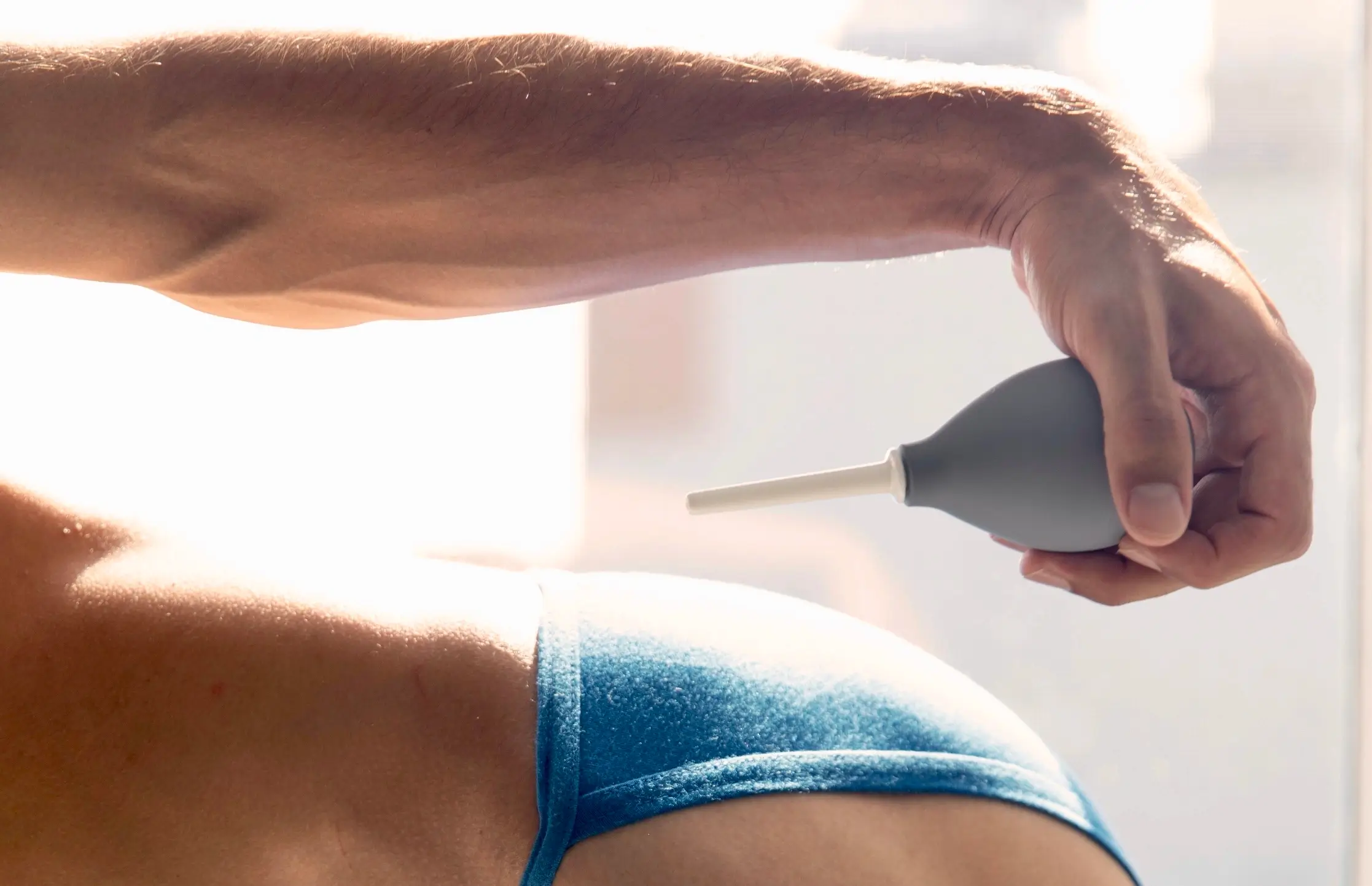
Hygiene also plays a key role. Always wash toys before and after use, and if douching is part of your prep, make sure it’s done safely and gently. Use an isotonic, iso-osmolar, and pH-balanced solution like our Anal Douche Powder Packs rather than harsh soaps or water alone.
| Material Type | Silicone Lube | Water-Based Lube | Oil-Based Lube |
| Silicone Toys | ✗ Do not use. Silicone dissolves silicone, causing the toy to become sticky, degraded, and porous. | ✓ Safe. Ideal for all silicone dilators, plugs, and cones. Requires regular reapplication. | ✗ Do not use. Destroys the texture of silicone and degrades the surface material over time. |
| Glass / Metal Toys | ✓ Safe. Excellent for long sessions; provides maximum slickness without drying out. | ✓ Safe. Fully compatible, though it will dry out faster on nonporous surfaces. | ✓ Safe. Safe for the toy itself, but highly difficult to wash completely off the surface. |
| Latex Condoms / Gloves | ✓ Safe. Fully compatible with latex barriers. Does not degrade the material. | ✓ Safe. Fully compatible and washes away easily with water. | ✗ Do not use. Oil degrades latex within 60 seconds, causing micro-tears and structural failure. |
Mental and Physical Preparation for Anal Gaping
Anal gaping is as much about mental readiness as it is about physical technique. In fact, no matter how diligent your stretching routine is, if your mind is tense or you don’t feel fully comfortable, your body will resist; and that’s when injury is more likely to occur.
Whether you’re exploring gaping solo or with a partner, preparation goes beyond just grabbing the right toys. It involves setting the tone, easing into the experience, and making space for your body to respond without pressure. After all, no one can relax when there’s too much pressure.
Relaxation Techniques
Before any anal play, especially advanced practices like gaping, take time to relax both your body and your mind. This might mean soaking in a warm bath, doing some light movement or stretching, or spending time with foreplay that helps you ease into the moment.
Breathing is one of your most powerful tools. Try deep belly breathing (inhale through your nose for four counts, exhale through your mouth for six) while inserting a dilator or plug. The exhale helps release tension and creates space for the muscles to soften.
You can also incorporate mindfulness: play music, light a candle, or talk through it with your partner. These can all help you feel present and in control. A relaxed state of mind directly translates to relaxed pelvic floor muscles, which is essential for comfortable stretching and safer gaping.
Communication and Consent
If you’re exploring anal gaping with a partner, communication is everything. You should both be on the same page about your goals, boundaries, and safe words. Your partner should be respectful, informed, and responsive. It’s a red flag if your partner is pushing you beyond your limits.
Talk before, during, and after play. Ask questions like: How does this feel? Are you okay to go further? Do you want to stop? These conversations are signs of trust, not interruptions. They also help prevent pain or injury.
And remember: consent can always be withdrawn. Just because something felt good last week doesn’t mean it has to feel good today. Anal play, especially at this level, should never be performative. It should be grounded in mutual respect and shared pleasure.
Positions That Support Gaping
While most of gaping comes down to internal control and training, certain positions can help your body open more easily. Starting positions should support comfort and relaxation, especially when you’re just getting familiar with the anatomy of your butt.
Dr. Goldstein recommends beginning with the bottom in control:
“Doggy style and similar positions change the pelvic angle to be truly open. However, I recommend starting with the bottom on top to get the lube and cock placement aligned. Then, when you’re ready, switch things up so that the ass is up. By tilting the pelvis, you’re allowing for increased pelvic floor relaxation, which makes it easier for gaping. Over time, the key is for you to be able to control the gape and, in any scenario, be able to use mind-over-matter to get yourself where you want to be, regardless of position.”
If you’re exploring solo, similar rules apply: positions that tilt the pelvis—like lying on your back with knees up, or bent over a pillow—can help open things up more naturally. As your practice evolves, you may find that gaping becomes less about position and more about control, breath, and mindset.
Aftercare and Recovery after Gaping
Once your session is done, your pelvic floor and sphincter muscles need a bit of time to bounce back and return to their natural resting state. Avoid jumping straight into a heavy workout, lifting weights, or sitting at a desk right after you finish training.
- Clean the area: Wash away any leftover lube with warm water and a mild, unscented cleanser. Leaving heavy silicone or water-based formulas on the skin for too long can trap bacteria and cause irritation.
- Cool things down: If your skin feels warm, tender, or a little swollen, hold a clean washcloth soaked in cold water against the area for 5 to 10 minutes to soothe the tissue.
- Take the weight off: Lie down flat on your back or your side for 15 to 30 minutes. This takes the physical pressure of your body off your pelvic floor and lets the muscles fully relax.
- Give it a rest: Wait at least 48 hours before your next training session. If you still feel a deep muscle ache, or if you notice a pink tint when you wipe, your body needs more time. Pause the toys until everything feels completely back to normal.
Myths vs. Realities of Anal Gaping
Many people who are curious about anal gaping encounter myths that stoke fear, shame, or misinformation. From worries about “permanent stretching” to the idea that gaping should always hurt, these myths can create unnecessary anxiety—and sometimes lead people to push their bodies too far, too fast.
Let’s break down the most common myths and ground the conversation in reality.
Myth: Anal gaping causes permanent damage.
Reality: Many myths about how to anal gape suggest long-term or permanent harm. But when done carefully and with proper technique, anal gaping doesn’t automatically lead to loss of muscle tone or function. The anus is designed to stretch and contract. With rest, proper lube, and gradual progression, most people don’t experience lasting changes.
What can cause damage? Rushing. Using unsafe toys. Ignoring pain. Failing to give the muscles time to recover. Like any advanced practice, it’s the how, not the what, that determines safety.
Myth: It’s supposed to hurt.
Reality: Pain is not part of the package. Discomfort may happen early on as you adjust to new sensations, but sharp, burning, or lingering pain is a signal to stop and reassess. Many people who use proper anal stretching exercises, breathing techniques, and lubrication never experience pain at all.
If it hurts, something isn’t working. That doesn’t mean you’ve failed; it means your body is asking for a different approach.
Myth: Anyone can gape if they try hard enough.
Reality: Everyone’s anatomy is different. Some people’s muscles will respond to stretching and eventually allow a visible gape. Others may build flexibility and control without ever reaching that point. It’s not about trying harder; it’s about listening to your body and finding what’s right for you.
The goal of anal gaping shouldn’t be to match a visual from porn. It should be about exploring your own pleasure and curiosity in a way that’s sustainable and affirming.
By understanding the truths behind anal gaping, people can explore with confidence and reduce unnecessary anxiety. Let’s move into what you should know about potential long-term effects so you can continue safely.
Does Anal Sex Hurt? Tips to Avoid Painful Sex
Long-Term Effects of Anal Gaping
When practiced carefully, anal gaping can absolutely be part of a satisfying anal sex life. But it’s important to be aware of the potential long-term effects, especially with frequent play or overly aggressive techniques.
The good news? Most of the risks often associated with gaping are preventable with the right approach. By understanding how to anal gape with proper technique, you’re already taking a major step toward reducing the chance of injury or discomfort down the line.
Sphincter Fatigue and Muscle Tone
One of the biggest concerns people have is whether anal gaping will lead to permanent loss of tone. In reality, the anal sphincter is made of muscles that, just like any other, need a balance of stretch, strength, and rest.
Think of it like your workout routine: if you’re doing repeated stretches without also working the opposing muscles, you risk creating imbalance. That’s where Kegel exercises come in. These controlled contractions of the pelvic floor help maintain strength, promote better muscle control, and support recovery after dilation work.
By alternating between stretching (via anal dilation techniques) and strengthening (with Kegels), you give the sphincter the best chance to stay functional and resilient long-term. Combine that with rest between sessions, and you’re setting yourself up for safe, sustainable exploration.
Risk of Hemorrhoids or Tearing
Overstretching, using too little lube, or skipping warm-up can cause small tears in the lining of the anal canal, also known as fissures. These can be painful and take time to heal. Repeated trauma can increase your risk of hemorrhoids or inflammation, especially if you push through discomfort instead of easing off.
Protect yourself by starting every session with a generous amount of super slick lubricant, taking your time, and stopping if you feel pain or burning. Tools like the Glass Anal Dilator Set, the Silicone Anal Dilator Set, and the Silicone Anal Cone allow for slow, gentle stretching with minimal friction—reducing the chance of injury while helping the body open up at its own pace.
Long-Term Control and Recovery
With proper technique and regular breaks, most people don’t experience any loss of anal control. But if you notice changes in muscle tone, involuntary leakage, or persistent discomfort, it’s worth consulting a specialist.
In some cases, pelvic floor physical therapy and other in-office and surgical remedies can help retrain the muscles, strengthen tone, and restore full function. These therapies aren’t just for recovery, they’re also useful for anyone exploring advanced anal practices who wants to maintain long-term wellness.
Everyone can enjoy anal gaping safely by paying attention to their body’s signals and using proper technique, as detailed in this guide.
How to Safely Do Anal: An Expert’s Guide
Anal Gaping Dos and Don’ts
Use this quick-reference guide to safely manage your training sessions and prevent damage.
| DO | DON’T |
| Apply thick layers of silicone lube to both your skin and your tools throughout the entire session. | Do not use oil-based products like coconut oil or lotion, which break down toys and irritate the lining. |
| Warm up for 15 minutes using deep belly breathing and smaller dilators before attempting a wider stretch. | Do not rush the process or skip sizes to force a faster gape, which causes immediate muscle tearing. |
| Perform daily Kegel exercises on your rest days to contract the pelvic floor and maintain muscle tone. | Do not wear a plug or cone for over 2 hours as this cuts off blood flow and causes severe tissue swelling. |
| Stop immediately if you feel a sharp burn or deep cramp, and allow 48 hours for the muscle to rest. | Do not use numbing creams or desensitizing sprays as blocking pain makes it impossible to feel if you are tearing tissue. |
Anal Gaping and Power Play
For some, anal gaping isn’t just about sensation, it’s a part of erotic power dynamics.
In Dom/Sub relationships, the act of opening up—literally and symbolically—can represent trust, surrender, or control. Gaping may be used as a visual element, a goal to work toward, or a shared ritual. It can also be a tool for building deeper intimacy through vulnerability and care.
But just like with the physical practice, consent and communication are everything. Set clear boundaries, use safe words, and never make gaping a performance or punishment. Whether solo or partnered, it should always be a mutual, consensual experience rooted in pleasure, not pressure.
Conclusion
Anal gaping is a rewarding, deeply personal, and often powerful part of anal play. For some, it’s about sensation. For others, it’s about control, surrender, or aesthetics. But for everyone, it should be about safety, patience, and listening to your body.
This guide is here to help you explore with confidence—grounded in science, supported by expert tools, and always aligned with your pleasure.
Ready to explore more? Discover Future Method’s science-backed anal health resources and products designed to support every stage of your journey—from warm-up to aftercare.
Frequently Asked Questions About How to Anal Gape Safely
How do I start anal gaping safely?
If you’re learning how to anal gape, start small—literally. The safest way to begin is by using anal dilation techniques with beginner-sized tools, like slim butt plugs or dilators, and slowly progressing to larger sizes over time. Always pair this with generous amounts of body-safe lubricant and warm-up play to ease your body into the experience.
It also helps to think of anal gaping as a training regimen. Just like building flexibility at the gym, you need to stretch gradually, breathe through resistance, and avoid pushing past pain. And don’t forget recovery: alternating stretching days with rest or Kegel exercises can help balance tone and flexibility, keeping your body both open and strong.
Can anal gaping cause permanent damage?
When done improperly, yes, there are risks. But with the right tools, slow progression, and rest, permanent damage is unlikely.
Many myths about how to anal gape center around the idea that your muscles will “never bounce back.” The reality is that the anal sphincter is a muscle like any other. If overworked without rest or counter-strengthening (like Kegels), it can fatigue. That’s why it’s crucial to treat your anal play like a fitness routine: stretch, recover, and strengthen.
Incorporating anal stretching exercises and allowing time off between sessions gives your body space to heal and recalibrate, making long-term effects much less likely.
What’s the best tool for beginners learning to anal gape?
Start with something small, smooth, and body-safe. Silicone and glass dilators are the gold standard because they’re nonporous, easy to clean, and designed specifically for progressive stretching.
Our Glass Anal Dilator Set offers firm pressure and weight for those who want more sensation and control, while our Silicone Anal Dilator Set provides a softer, more flexible introduction that’s perfect for beginners.
For those ready to level up, the Silicone Anal Cone is a next-step training tool that gently challenges the muscles with its continuous taper. It’s ideal for preparing the body for more advanced play—like anal gaping—while still prioritizing comfort and safety.
Most anal dilation techniques begin with a series of graduated sizes, allowing your body to adapt slowly. Just like you wouldn’t jump into lifting heavy weights without warming up, you shouldn’t jump to advanced plugs without building a strong foundation first.
How long does it take to achieve anal gaping?
There’s no universal timeline. How to anal gape depends on your body, your experience, and how consistently you train.
Some people may see a passive gape after a few weeks of consistent practice, while others may take months (or longer) to feel ready. And some people may never visibly gape at all—and that’s perfectly fine.
Think of it like building flexibility at the gym: some people can drop into a split in a month, others may need years of practice. The key is to stay patient, listen to your body, and avoid rushing.
Do I need a partner to practice anal gaping?
Not at all. Many people explore anal gaping solo using anal dilation techniques and a combination of toys and exercises. In fact, solo practice can be a great way to build body awareness and control before introducing a partner, especially because there’s no pressure to perform.
If you do choose to explore with someone else, communication is crucial. Make sure your partner understands your goals, boundaries, and pacing, and is willing to go at your speed. Gaping should never be something you’re pressured into doing (unless, of course, that’s your kink).
Dr. Evan Goldstein's Expert Picks
Glass Anal Dilator Set™
Enjoy comfort and pleasure with our glass anal trainer set for priming or play, whether solo or shared, designed for gradual training and confident progression.
Silicone Anal Cone™
Our silicone anal cone expands playtime by gradually stretching muscles and skin, supporting comfort, flexibility, and fuller training play.